3. Large welded steel silo: Suitable for ultra-large capacity (tens of thousands of tons) petroleum coke storage.
Advantages of Steel Silos in Petroleum Coke Storage:
1. Excellent Sealing Performance, Reducing Dust Pollution
Steel silos feature a fully enclosed design, effectively controlling dust spillage compared to open-air storage yards. Combined with dust removal equipment, this enables green and environmentally friendly storage, meeting increasingly stringent environmental regulations. This is particularly crucial for petroleum coke storage companies, significantly reducing environmental governance costs and risks.
2. Highly Efficient Automated Operation, Reducing Labor Costs
Modern petroleum coke storage silos are typically equipped with automated feeding and discharging systems (such as belt conveyors and pneumatic conveyors), combined with:
* Material level detection systems
* Automatic unloading devices (air cannons, vibratory arch breakers)
* PLC intelligent control
This achieves full-process automation, significantly reducing manual intervention and improving operational efficiency.
3. Large-Capacity Design, Saving Land Resources
Steel silos can be designed with single-chamber capacities ranging from several thousand tons to tens of thousands of tons, suitable for large-scale centralized storage. Compared to multiple small silos or open-air storage yards:
* Smaller footprint
* More compact layout
* Easier centralized management
This is especially important for industrial parks where land costs are high.
4. Excellent corrosion resistance, adaptable to complex working conditions
To address the sulfur and corrosive substances that may be present in petroleum coke, steel silos can improve durability through the following methods:
* Galvanized steel sheet (hot-dip galvanized layer ≥275g/m²)
* Epoxy or polyurethane coating
* Stainless steel lining (high-end applications)
Effectively extends equipment life and reduces maintenance costs.
5. Smooth discharge, solving arching problems
Petroleum coke is prone to arching and blockage problems, while steel silos can optimize discharge performance through various technical means:
* Conical bottom structure design (optimized inclination angle)
* Air fluidization system
* Vibration or mechanical arch-breaking device
Ensuring continuous and stable material discharge, improving production continuity.
6. Short Construction Cycle and Quick Return on Investment
Compared to concrete silos, which often have construction cycles of several months or even over a year, steel silos offer significant advantages:
* Factory prefabrication and rapid on-site installation
* Construction cycle typically shortened by 30%–50%
* Production can commence simultaneously with construction (for some projects)
This is crucial for businesses to quickly launch production and seize market share.
7. Flexible Expansion to Adapt to Business Development
Steel silo systems offer excellent scalability:
* The number of silos can be increased
* Automation systems can be upgraded
The conveying system can be modified
Suitable for the needs of businesses at different stages of development.
Comparison of Steel Silos and Traditional Storage Methods
| Project |
Steel Silo |
Concrete Silo |
Open Storage Yard |
| Sealing PerformanceC |
Excellent |
Good |
Poor |
| Environmental Friendliness |
High |
Medium |
Low |
| Automation Level |
High |
Medium |
Low |
| Construction Period |
Short |
Long |
Short |
| Maintenance Cost |
Low |
Medium |
High |
| Footprint |
Small |
Medium |
Large |
From a comprehensive performance perspective, steel silos have significant advantages in the construction of modern petroleum coke storage silos.
.jpg)
Selection and Design Recommendations
When constructing petroleum coke steel silos, the following technical points should be considered:
1. Capacity Planning: Design rationally based on daily output and inventory cycle.
2. Unloading Method Selection: Choose a conical bottom or flat bottom structure based on material characteristics.
3. Explosion-proof Design: Petroleum coke dust poses a certain explosion risk; an explosion-proof system should be installed.
4. Dust Removal System Configuration: Meet environmental emission standards.
5. Corrosion Resistance Design: Select materials based on the quality of the petroleum coke.
If you have any questions about selecting petroleum coke steel silos based on our introduction, or if you are unsure how to choose a suitable steel silo for petroleum coke storage, please feel free to contact us by phone or leave a message online. We have a professional design and construction team to provide you with one-on-one 24-hour professional service.
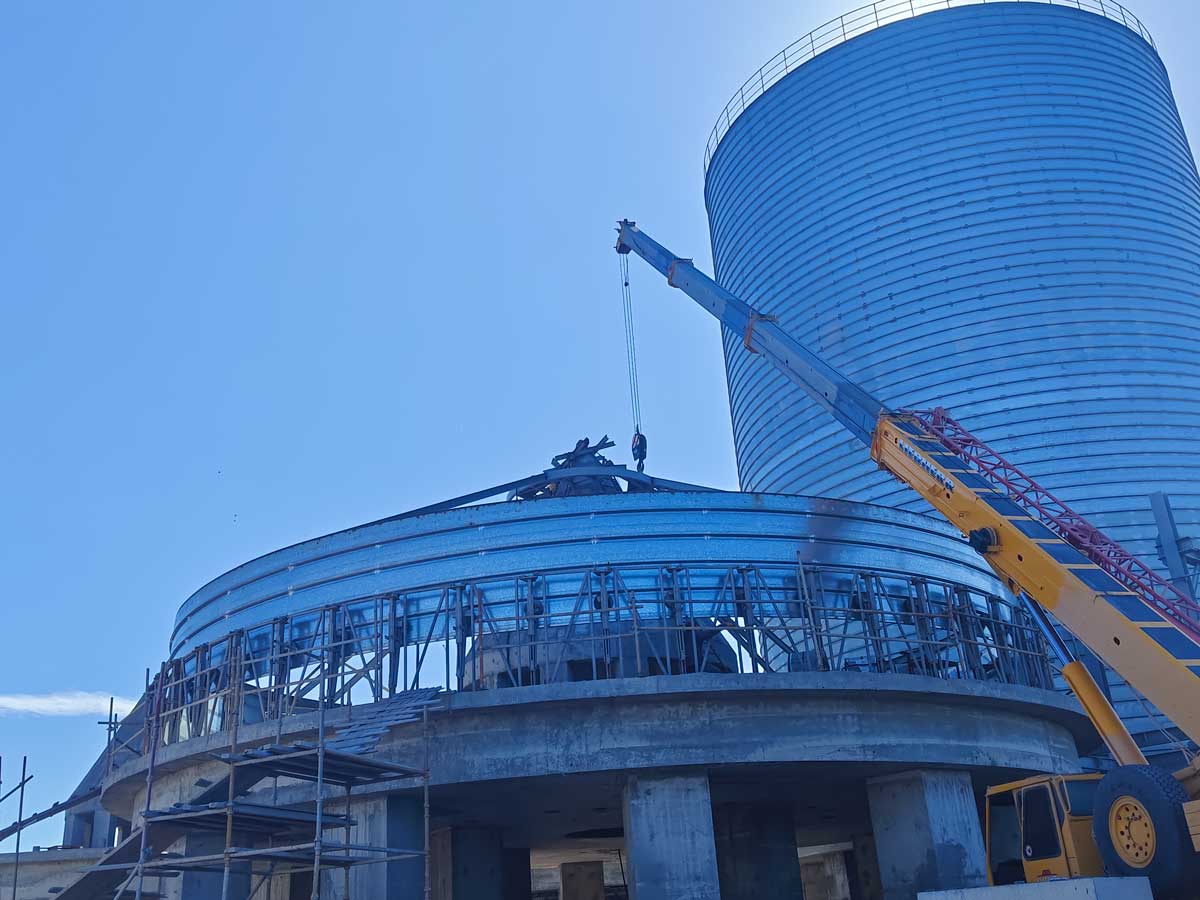
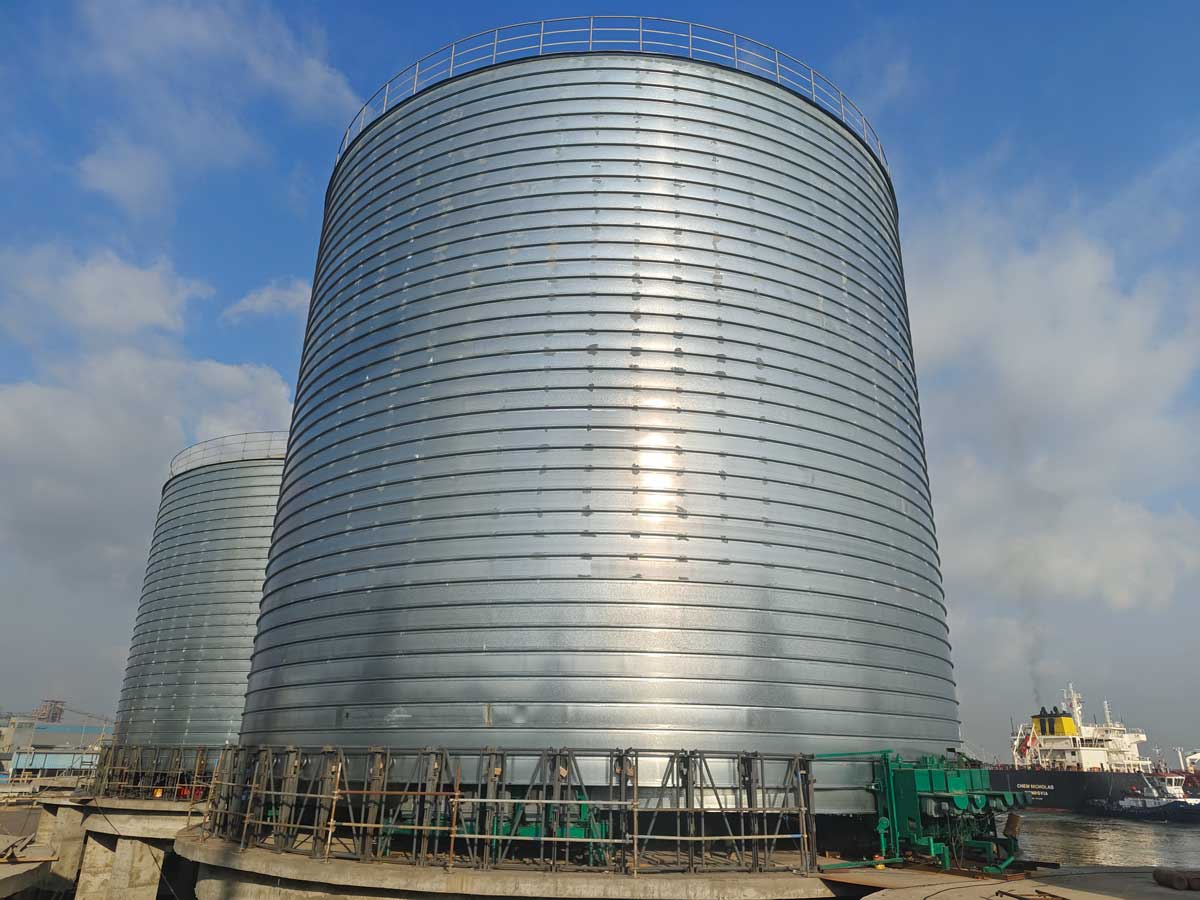
With increasingly stringent environmental policies and rising levels of industrial automation, traditional petroleum coke storage methods are gradually being replaced by more efficient and environmentally friendly solutions. As a mature and efficient bulk material storage device, petroleum coke steel silos, with their excellent sealing performance, large capacity design, high degree of automation, and long-term economic benefits, are becoming the mainstream trend in the industry.
For companies planning to build or upgrade their petroleum coke storage silos, choosing steel silos is not only a technological upgrade but also a crucial step in enhancing their competitiveness. In the future, with the further development of intelligent and green manufacturing, steel silo systems will continue to be optimized, providing more efficient, safe, and environmentally friendly solutions for petroleum coke storage.

.jpg)
(1).jpg)
.jpg)
.jpg)