Market Overview: The Green Engine of Energy Transition
According to recent data from renowned market analysis institutions, the global bio-pellet energy market was valued at approximately USD 3.012 billion in 2024. It is projected to maintain a robust Compound Annual Growth Rate (CAGR) over the next decade (2025-2035). This growth is primarily driven by the global wave of decarbonization, mandatory blending policies for renewable energy enacted by governments, and the urgent need to transition from fossil fuels to clean alternatives.
The biomass fuel industry is currently undergoing a critical generational shift. As industry analysis indicates, the market is gradually transitioning from First-Generation biofuels dependent on food crops (like corn and sugarcane) to Second-Generation non-food biofuels derived from agricultural and forestry residues (such as straw, wood chips, and rice husks). This transition not only resolves the ethical controversy of "fuel vs. food" but also significantly expands feedstock sources and reduces full-lifecycle carbon emissions.
Market Dynamics: Diversification of Feedstock and Applications
1 Feedstock Analysis
In the raw material landscape of the bio-pellet market, Forestry Residues currently hold the largest market share. Due to the high energy density and relatively stable supply chain of wood processing by-products (e.g., sawdust, bark), wood pellets have become the mainstream product. However, with the maturation of agricultural waste utilization technologies, the Agricultural Residues segment—including straw and husks—is becoming the fastest-growing sector, especially in agrarian-rich Asian regions.
2 Application Perspective
Power Generation remains the dominant application scenario for bio-pellets. In the retrofitting of large coal-fired power plants for biomass co-firing, bio-pellets are the preferred choice due to their direct substitutability for coal. Meanwhile, demand in Industrial Heating is rising rapidly. Against the backdrop of decarbonizing industrial parks and building zero-carbon factories, biomass pellets provide a unique and viable green thermal solution for industrial boilers that are difficult to electrify.
Industry Pain Point: The Critical Challenge of Storage
With the explosive growth of bio-pellet production capacity, the "storage and logistics" link in the supply chain has become a bottleneck constraining industry efficiency. Unlike traditional coal, biomass pellets have stringent requirements for their storage environment:
Hygroscopic Risk: Biomass pellets easily absorb moisture from the air, leading to reduced calorific value, crumbling, and even mold growth.
Spontaneous Combustion Hazard: Due to high volatile content and high reactivity, large-scale stacking can easily lead to heat accumulation inside the silo, triggering spontaneous combustion or even dust explosions.
Physical Degradation: During material handling, pellets are prone to breakage, creating dust that not only wastes raw material but also increases the load on dust collection systems.
The lack of industry standards once plagued the market, but with the introduction of regulations like the "Technical Guidelines for Storage of Biomass Fuel" and the adoption of advanced storage technologies, these issues are being systematically resolved.
Technological Innovation & Solutions: SRON's Smart Storage Approach
In the global practice of addressing biomass pellet storage challenges, specialized EPC (Engineering, Procurement, and Construction) contractors are playing a pivotal role. As a leader in this field, SRON SILO ENGINEERING leverages its deep expertise in bulk material storage and transportation to provide a complete "Safety + Intelligence" solution for the global biomass energy market.
1 Core Technological Advantages: A "Safe" for Bio-pellets
Tailored to the specific properties of biomass pellets, SRON has developed several core technologies:
High-Airtightness Spiral Steel Silos: Utilizing advanced Spiral Folding Technology, these silos ensure superior airtightness, effectively isolating external moisture and physically preventing pellet dampness and mold.
Intelligent Monitoring System: This acts as the "brain" of the SRON silo. The system integrates high-precision digital temperature cables, humidity sensors, and gas detectors to monitor micro-changes in grain condition in real-time. Once abnormal temperature rises or excessive gas concentrations are detected, the system automatically triggers alarms and activates ventilation and cooling measures, fundamentally preventing spontaneous combustion risks.
Moisture-Proof & Explosion-Proof Design: Combined with the explosive characteristics of biomass dust, SRON strictly follows explosion-proof standards in silo design, equipping them with explosion venting devices and inert gas protection interfaces to ensure absolute safety for power plants and processing facilities.
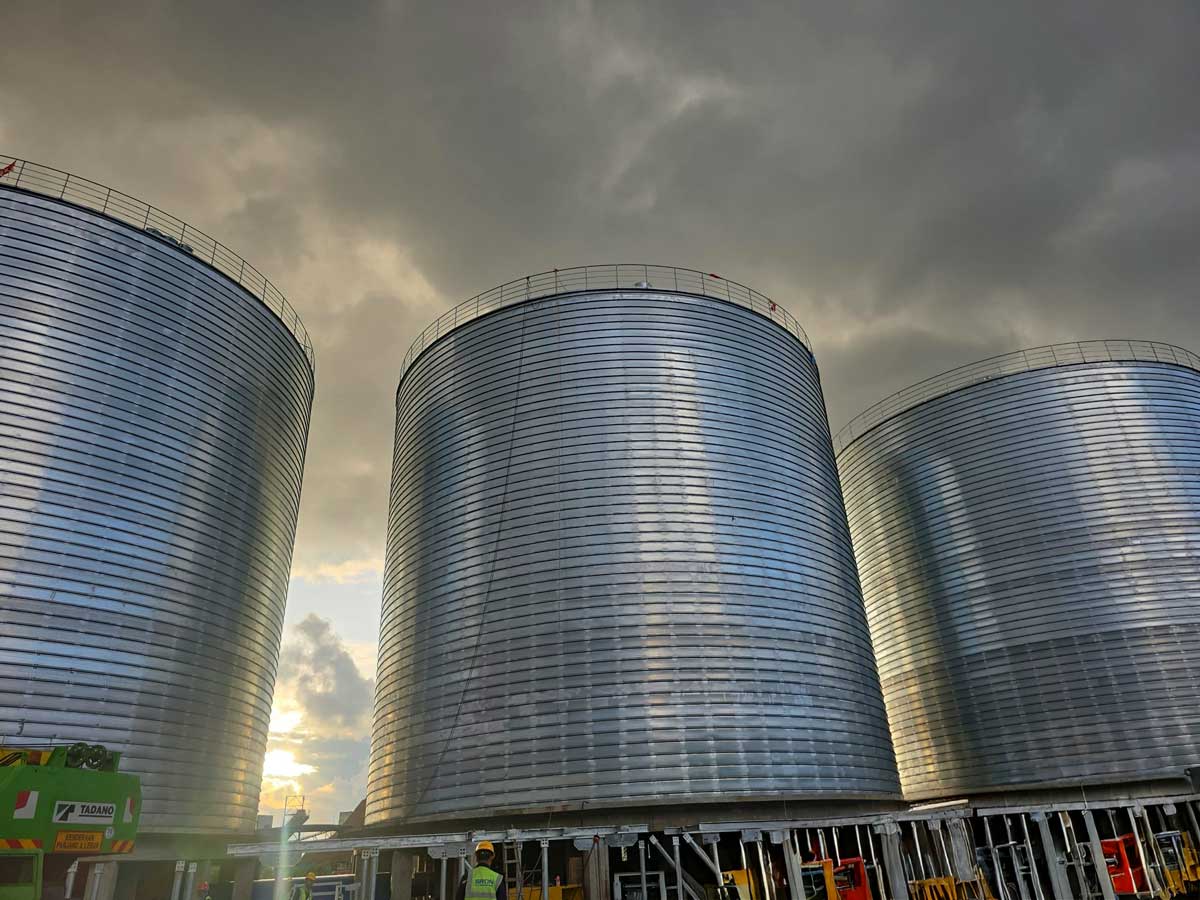
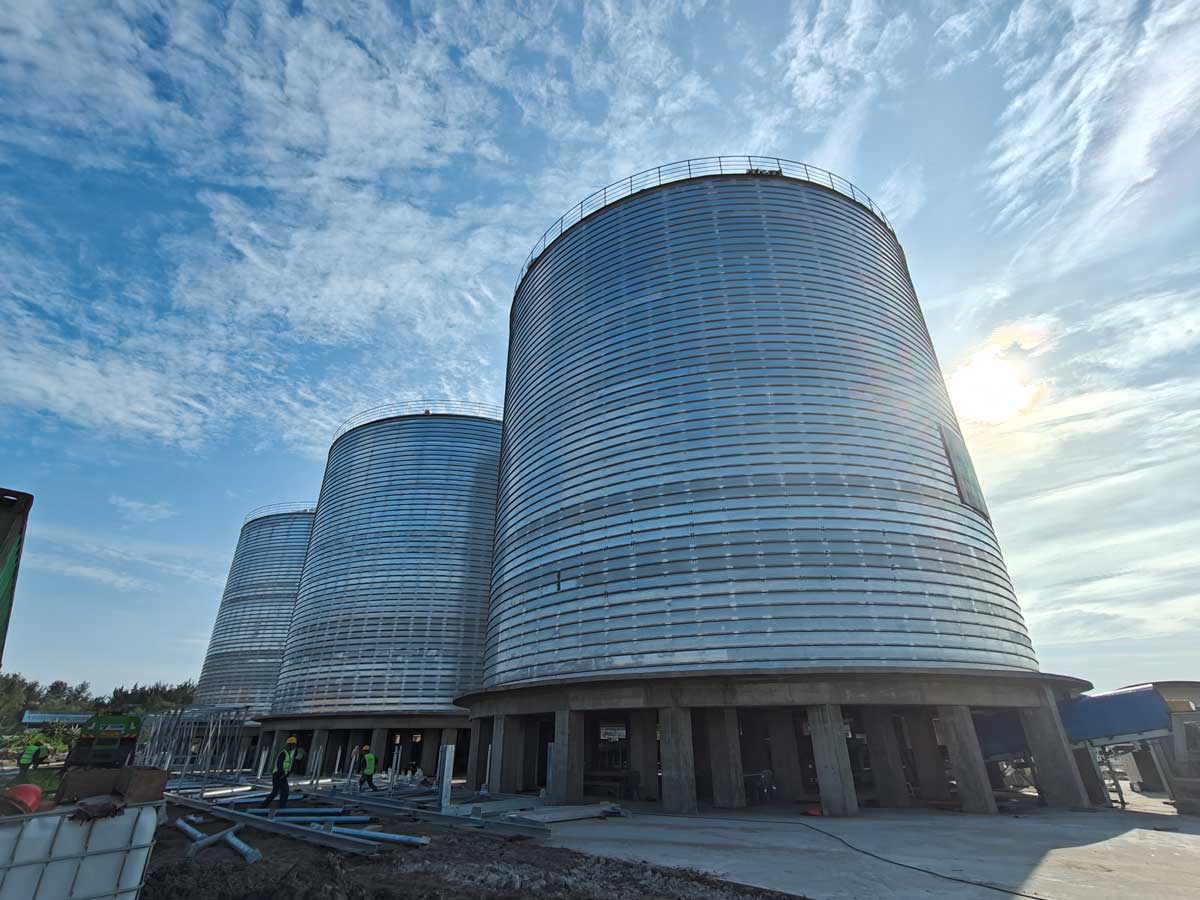
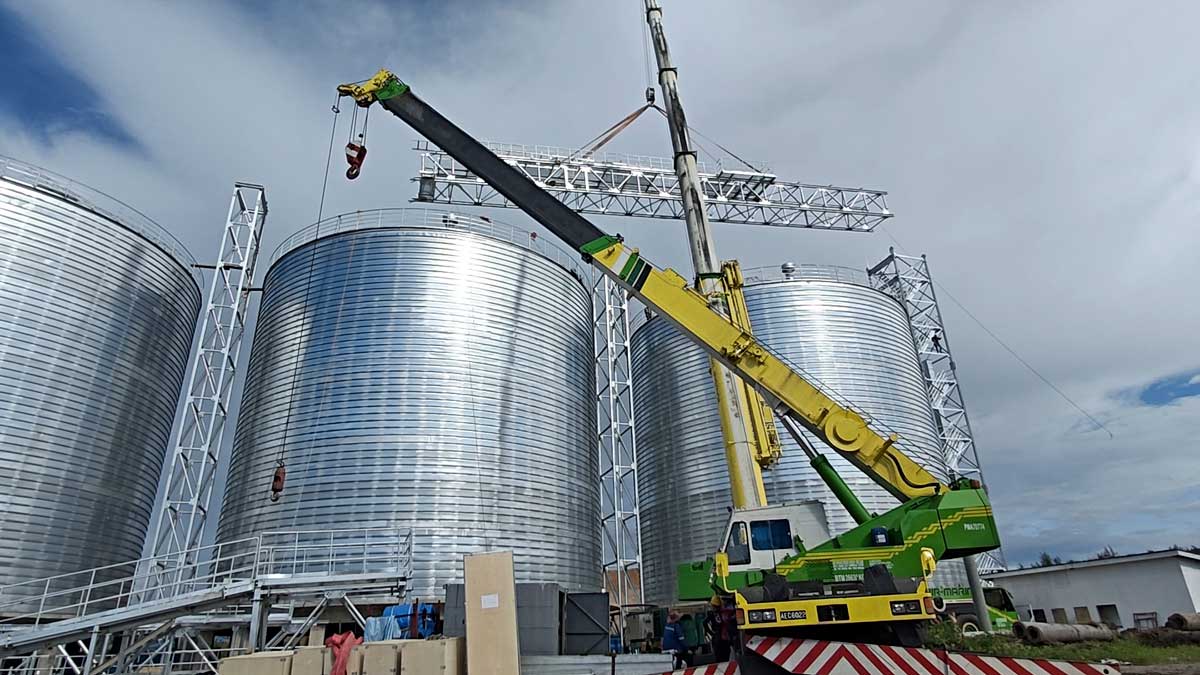
In Southeast Asia, a core region for biomass energy production, the Malaysia 3x5000 Ton Wood Pellet Storage Project delivered by SRON has become a local benchmark engineering feat. Serving a large sustainable renewable energy company, SRON designed and constructed three 5,000-ton spiral steel silos. Addressing Malaysia's high-temperature, high-humidity tropical rainforest climate and the severe environment frequently threatened by typhoons, the SRON team implemented the following innovative solutions:
The project comprises of a spiral steel silo, unloading pit, weighbridge, conveying systems, long-distance conveying systems out of the silo. Our company fully considered the storage characteristics of wood pellets in the pre-design stage, and strictly monitored and managed the temperature and humidity in the silo to achieve real-time monitoring.
Meanwhile, considering the characteristics of the terminal project, it is equipped with high output in and out of the silo project, which reduces the docking time of the vessel, solves the problems of stagnation, difficult maintenance and high labor cost that may occur in the centralized incoming material, dust collection and long-distance transportation, and meets the customer's demand for the full automation of the storage and transportation.
Regional Outlook and Future Trends
Regionally, Asia-Pacific is expected to be the fastest-growing market globally. Countries like China, India, and Southeast Asian nations not only possess abundant agricultural and forestry biomass resources but are also driven by rapidly growing energy demands and increasingly strict carbon emission regulations.
Looking ahead, with the deep integration of "AI + Industry," storage engineering providers like SRON, who can offer digitalized, intelligent full-lifecycle management services, will occupy a more central position in the global biomass energy industrial chain. They will assist the industry in moving from simple "scale expansion" to a stage of "lean and efficient" high-quality development.

.jpg)