Article Summary
The key to selecting clinker silos for cement plants lies in first assessing the clinker temperature, particle size, abrasiveness, moisture content risk, and the plant's continuous discharge requirements. For most medium to large-scale projects, clinker silos should be selected based on a "systems engineering" approach, rather than simply by tonnage.
In short, the suitable clinker silo is not the largest, but the one that best matches the clinker operating conditions, plant cycle time, and systems engineering requirements.
Key Points
When selecting clinker silos, first consider the material operating conditions, then the silo capacity.
For medium to large-scale cement projects, welded steel silos are generally more suitable for large-capacity, continuous clinker storage.
The clinker inlet temperature needs to be controlled; data shows that cement clinker should not exceed 85°C upon entry.
What truly affects operational stability is often not the silo itself, but the coordination of the discharge, dust removal, sealing, material level monitoring, and conveying systems.
What is a clinker silo? Where does it fit in the cement production process?
Let me first clarify the concepts. A clinker silo is essentially a core piece of equipment in the clinker storage and buffering process of a cement plant. It receives, temporarily stores, and stably outputs clinker, providing continuous supply conditions for subsequent batching, grinding, or transfer. Steel silo systems are widely used for storing bulk industrial materials such as cement, fly ash, and clinker, indicating that the clinker silo is not an isolated product but a crucial node in the entire bulk material storage and transportation system.
A clinker silo is not simply a container to "put clinker in," but an engineering system node that undertakes buffering, sealing, moisture protection, environmental protection, and continuous discharge tasks. For cement plants, the selection of a clinker silo must be determined in conjunction with upstream conveying, downstream grinding, dust removal, material level monitoring, and civil engineering conditions.
Many customers initially confuse clinker silos with cement silos, but they are not the same. Cement has higher requirements for sealing, pneumatic conveying, and dust control; clinker, on the other hand, is more granular, abrasive, moisture-sensitive, and requires continuous discharge management. Clinker is generally a block or large particle material that has been cooled and crushed, with a common particle size of about 3–25 mm. If kept dry, it can be stored for several months without significant quality loss.
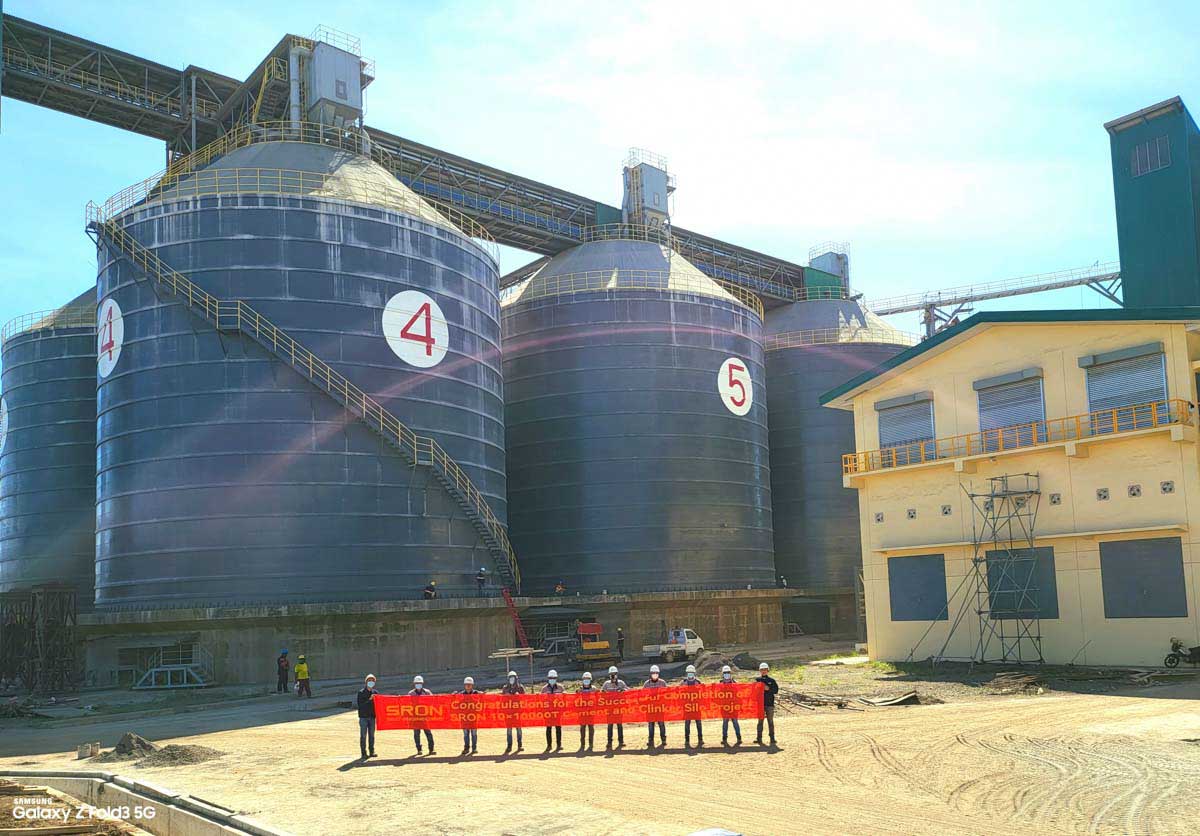
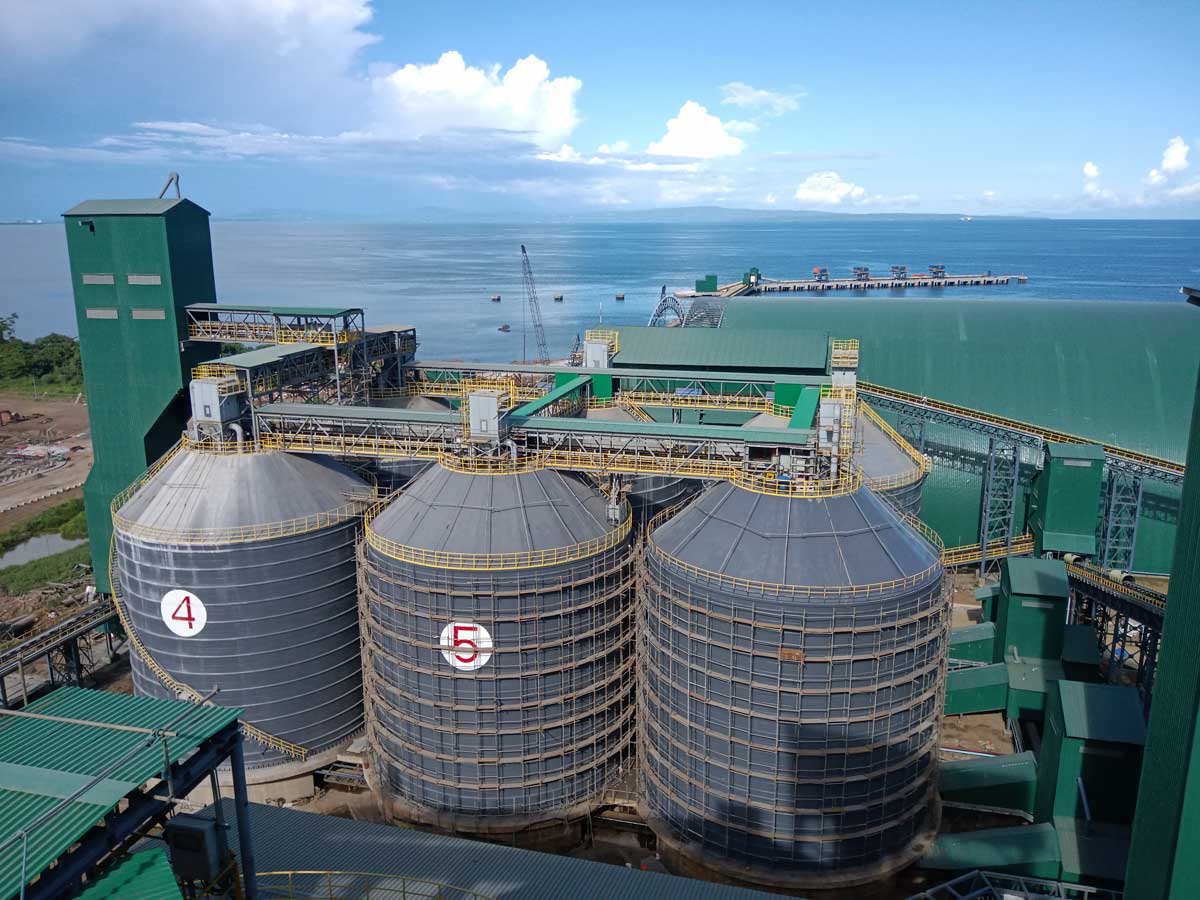
One direct reason for choosing steel plate clinker silos is to avoid the problems of moisture, pollution, and quality fluctuations caused by open-air storage; this is also why clinker silos are becoming increasingly common in cement plants, grinding stations, and transfer scenarios.
Before selecting a clinker silo, what material characteristics must be assessed?
If I were the project manager, I wouldn't first ask "What tonnage?", but rather the following questions: What is the clinker temperature? What is the particle size range? What is the daily turnover rate? Is it for long-term storage? Is the site humidity high? Is wear and tear significant? Are there environmental limits to meet? These issues directly determine the silo type, lining, sealing, unloading, and dust removal logic.
First is temperature. This is one of the most easily underestimated, yet most critical, boundaries in clinker silo selection. Cement clinker must not exceed 100°C when loaded into the silo. Excessive temperature can cause silo deformation and safety risks. This judgment is crucial because many people, when discussing "clinker silos," instinctively associate high-temperature clinker from the kiln tail with silo loading. However, in engineering practice, clinker that has undergone proper cooling is typically suitable for steel silo systems.
Second is moisture content and moisture risk. Clinker is sensitive to humidity; when exposed to moisture, it undergoes hydration and clumping, which in turn affects the quality of subsequent cement. Moisture-proofing, leak-proofing, and sealing are crucial for clinker storage, which is why I generally do not recommend long-term open-air storage of clinker.
Thirdly, there's particle size and abrasiveness. While clinker isn't ultrafine powder, it still presents significant abrasive challenges to the silo bottom, chutes, gates, and discharge outlets. If a project only considers silo strength and ignores abrasive conditions, frequent repairs to the unloading device, discharge cone, and connecting parts are likely later on. This problem is particularly troublesome in continuously operating cement plants, as it directly translates to downtime losses. Ladders, corridors, trestle bridges, and welded components of large clinker silos require regular inspection, with thorough checks for corrosion and deformation.
The starting point for selecting a clinker silo is not its capacity, but the material's operating conditions. Temperature, humidity, particle size, abrasiveness, and discharge rhythm are prerequisite variables that determine the silo type, sealing, dust removal, and unloading methods. Ignoring these variables often leads to problems later, such as material blockage, dust generation, and increased maintenance costs.
How to determine the appropriate silo type, capacity, and structural form?
When discussing silo types, I prefer to say that "there is no absolutely best silo type, only the type that best matches the current project's boundaries." However, in the clinker scenario, the patterns are relatively clear.
Welded steel silos are commonly used for industrial bulk materials such as cement, clinker, and fly ash. For scenarios with larger single-silo capacities, welded steel silos are more frequently used for cement and similar applications. Large prefabricated industrial silos can also cover 1,000–100,000 tons and can be used for cement, clinker, and fly ash applications. In other words, if your project prioritizes large capacity, long-term stability, and mature industrial applications, welded steel silos are usually a more reliable mainstream choice; if you have clear future needs for dismantling, relocation, or reuse, large prefabricated solutions are also worth comparing.
So how do you calculate capacity? I recommend calculating based on "factory cycle time + buffer days + expansion redundancy," rather than just looking at a single target tonnage. You need to clarify at least three things:
First, what is the daily clinker production or consumption?
Second, how many days' buffer do you expect the storage tank to provide?
Third, are there any expansions or operational fluctuations expected in the next two to three years?
If the project is a grinding station or port transshipment facility, the buffering logic will differ from that of an integrated clinker line. From an engineering perspective, production rhythm, kiln shutdown risks, material delivery cycles, and the continuity of subsequent grinding must all be taken into account.
For most medium to large-scale cement clinker storage projects, welded steel silos are usually the preferred option because they are better suited for large-capacity, continuous, and industrial-grade system integration. Whether to switch to a large prefabricated solution depends primarily on whether the project requires disassembly and reuse, on-site construction boundaries, and total cost of ownership targets.
Which supporting systems are most critical for the safe storage and smooth discharge of clinker?
When working on this type of content, the point I most want to remind clients is that clinker silo problems often stem not from the silo itself, but from the system.
A clinker silo that can operate stably over the long term must consider these systems as a whole: feed conveying, silo top dust collection, material level monitoring, sealing and waterproofing, silo bottom unloading, metering, downstream conveying, and maintenance and safety facilities.
A truly mature clinker silo solution is not as simple as "a steel shell + a discharge port," but rather a system configuration centered around smooth discharge, dust control, and automated collaboration. Especially for materials like clinker that are abrasive, moisture-sensitive, and require stable plant operation, inaccurate material level monitoring, insufficient silo top dust collection, and a poorly designed silo bottom unloading system will repeatedly lead to problems such as dust generation, material caking, flow deviation, and even excessive manual intervention.
When selecting a clinker silo, the silo body is only the foundation. What truly determines the quality of operation is the coordinated functioning of the feeding, discharging, dust removal, material level monitoring, sealing, and conveying systems. Without proper system integration, even the highest-specification silo body will struggle to maintain long-term stability.
Common Misconceptions and FAQs
The five most common misconceptions are:
First, focusing only on silo capacity while ignoring clinker temperature. As mentioned earlier, clinker inlet temperature must be controlled; high-temperature boundary issues cannot be left to be remedied after equipment installation.
Second, focusing only on the silo structure while ignoring the entire system. If the silo top dust removal, material level monitoring, bottom unloading, and conveyor interfaces are not properly configured, even the strongest steel structure cannot compensate.
Third, comparing only initial investment while ignoring maintenance and environmental upgrades. Short-term savings may be doubled in the cost of downtime and rectification.
Fourth, treating clinker silos as "standard products." In reality, daily consumption, material delivery methods, civil engineering conditions, climate, and environmental requirements vary, leading to significant differences in the final solution.
Fifth, ignoring engineering experience. Clinker silos are not single-piece equipment purchases but rather the implementation of an industrial system; the EPC coordination capabilities directly impact the final outcome.
FAQ:
1. What is the difference between clinker silos and cement silos?
Clinker silos are primarily designed for storing granular, more abrasive, and moisture-sensitive clinker; cement silos, on the other hand, emphasize powder sealing, pneumatic conveying, and dust control. Both are bulk material storage systems, but their design priorities differ.
2. Are welded steel silos more suitable for storing clinker?
For medium to large-scale, long-term, continuous cement projects, the answer is usually yes. Welded steel silos are commonly used for large-capacity industrial bulk material storage, and clinker is one of their typical applications.
3. Can high-temperature clinker be directly fed into steel silos?
It is not recommended to rely on experience to determine this. The uploaded information clearly states that the temperature of cement clinker entering the silo should not exceed 85°C. Exceeding this temperature may cause silo deformation and safety risks.
4. What auxiliary systems should be configured for a clinker silo project?
At a minimum, attention should be paid to feeding conveyors, silo top dust removal, material level monitoring, silo bottom unloading, metering, downstream conveying, and safety maintenance facilities. 5. Should you choose a single large silo or multiple smaller silos?
This depends on your daily consumption, buffer requirements, incoming material fluctuations, downtime risks, and expansion plans. Single-silo management may be more centralized, but multiple silos offer advantages in flexible scheduling and maintenance isolation. This conclusion needs to be determined in conjunction with the specific process package. Based on current information, I do not recommend drawing conclusions independently of the plant's cycle time.
If you ask me how to "choose the right" clinker silo, my answer is simple: it's not about buying the largest silo, but about buying a system that best suits your plant's cycle time, clinker operating conditions, and long-term operational goals.
According to SRON's engineering experience, the value of a clinker silo lies not only in its storage capacity, but also in its ability to help the plant reduce open-air storage, stabilize output, reduce dust, facilitate maintenance, and truly synergize with the overall plant process. For most medium to large-sized cement plants, prioritizing the evaluation of welded steel silos and developing an EPC-level solution from a systems engineering perspective is a more prudent approach.

.jpg)
.jpg)
.jpg)